Teaching verbs
learn
learn teaches rocinante a new verb: its name, the names of what it takes, and a block of what it does. After that it is used like any other verb:
learn flower x y [ push [ move x y repeat 6 [ turn 60 ellipse at 0 -30 size 20 50 fill pink ] circle at 0 0 radius 10 fill gold ]]flower 100 150flower 300 150
A verb can be used above the line that teaches it, and from any file of the sketch.
give
A verb that works out a value hands it back with give, which also ends it:
learn double n [ give n * 2 ]print (double 21)Every way through a verb that gives a value must reach a give; rocinante says which way does not. A verb without give is a statement and cannot be used as a value.
stop
stop ends a verb early, without a value:
learn greet name [ if name is "" [ stop ] print ("hello " + name)]greet "ada"Words with defaults
Words after with are optional, each with the value it has when the call leaves it out. They are written like a verb’s own words:
learn star size with points 5 [ repeat points [ forward size right (720 / points) ]]star 100star 60 points 7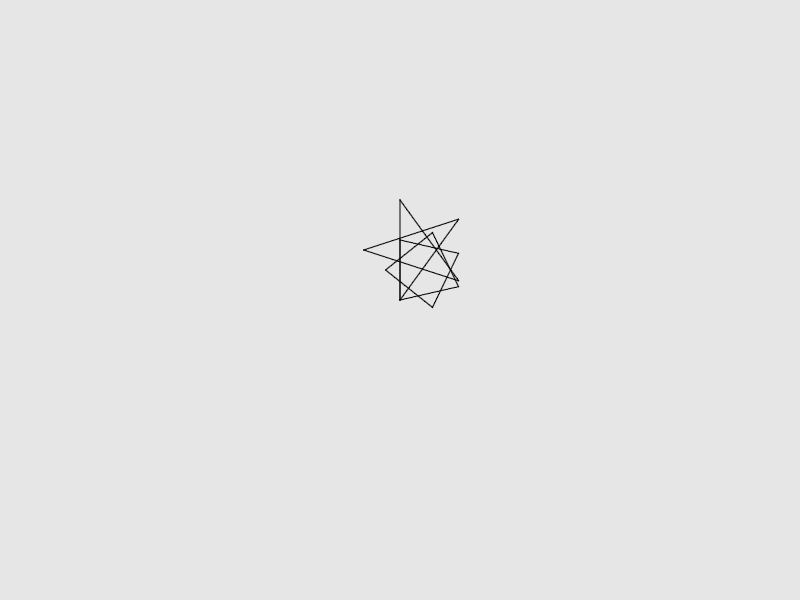
Changing what a verb is given
Records and lists are shared, so a verb can change one it is given:
learn step p [ p.pos = p.pos + p.vel ]ball = { pos: { 20, 150 }, vel: { 4, 0 } }draw [ background 240 step ball circle at ball.pos radius 20 fill gold]
Names given a value inside a verb belong to the verb; names of the sketch it can read and change.
A verb that uses itself (recursion)
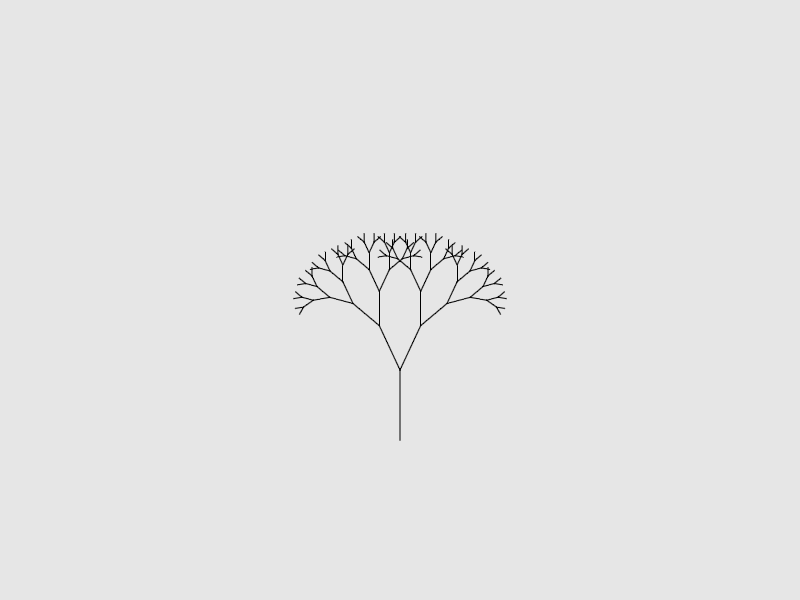
A verb may call itself, which is how trees and fractals are drawn. It needs a way to stop:
learn branch size [ if size < 6 [ stop ] forward size push [ left 25 branch (size * 0.7) ] push [ right 25 branch (size * 0.7) ]]pen upback 140pen downbranch 70